
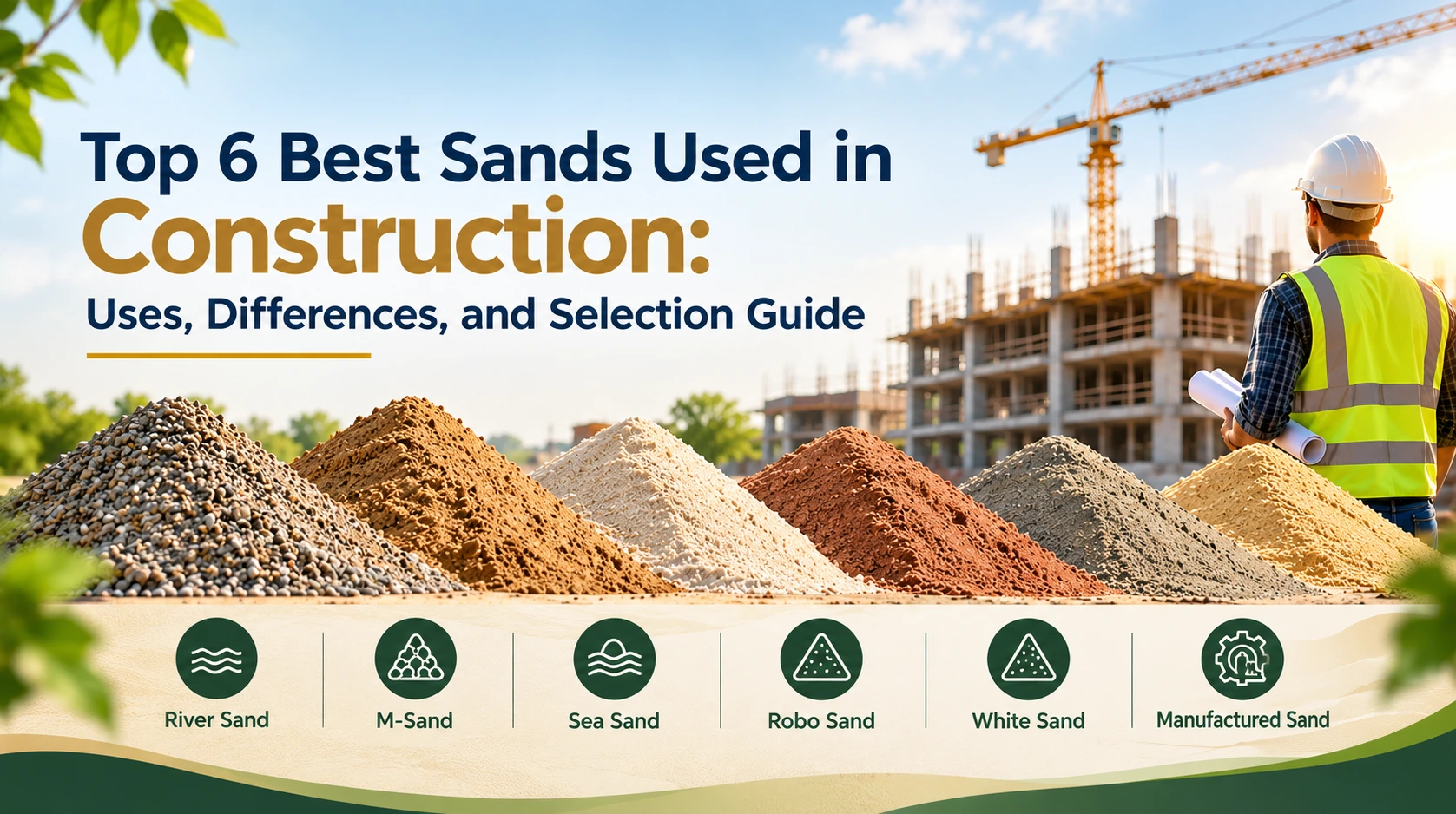
Top 6 Best Sands Used in Construction: Uses, Differences, and Selection Guide
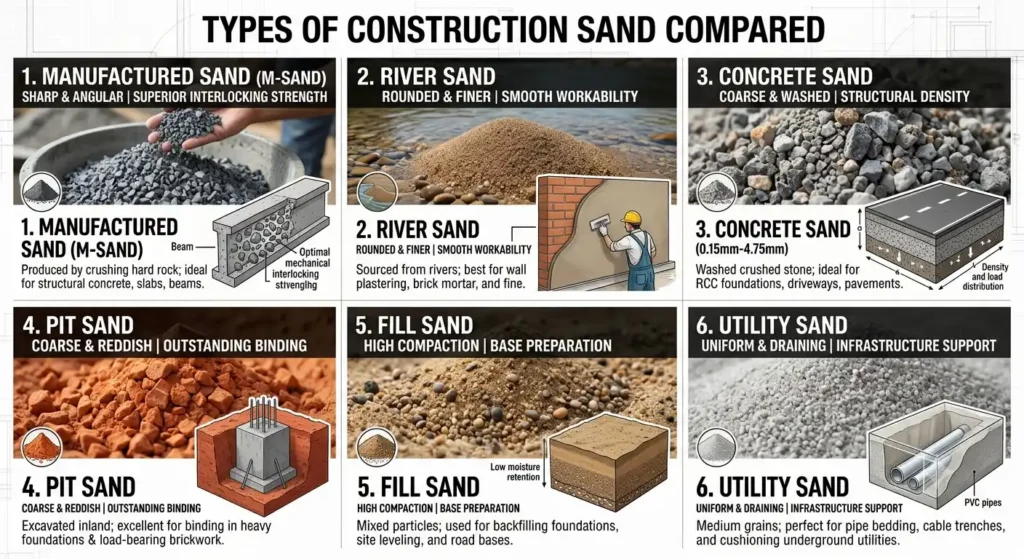
Types of Construction Sand Comparison Table
Sand Type | Grain Shape / Texture | Best Feature | Key Application |
M-Sand | Angular & Cubical | High Interlocking Strength | Structural Concrete (RCC) |
River Sand | Rounded & Smooth | Smooth Finish & Workability | Plastering & Brick Mortar |
Concrete Sand | Rough & Coarse | Structural Load Capacity | Foundations & Slab Mixes |
Pit Sand | Angular & Rough | Strong Surface Bonding | Heavy Foundations & Brickwork |
Fill Sand | Mixed & Coarse | Low Settlement & High Density | Ground Leveling & Site Sub-bases |
Utility Sand | Medium to Coarse | Excellent Drainage & Support | Pipe Bedding & Cable Trenches |
Quality of sand is critical for building structural strength, longevity, and overall finish quality. Different construction phases require specific particle shapes, textures, and gradations.
Here is a concise breakdown of the top six sands used in modern civil engineering and building projects.
1. Manufactured Sand (M-Sand)
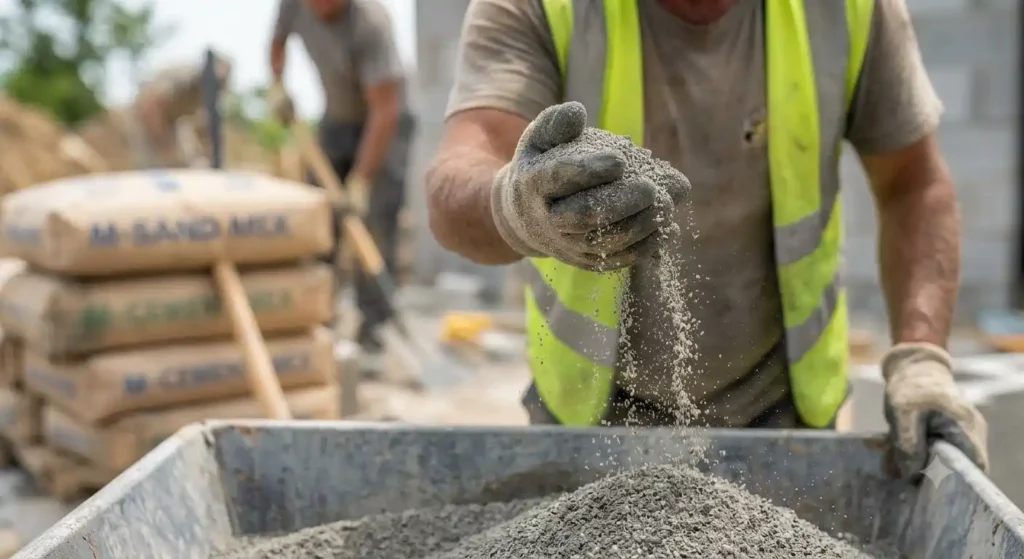
Manufactured Sand (M-Sand) is an eco-friendly alternative to natural river sand, produced by crushing granite or hard basalt rock into fine, controlled aggregates.
- Key Characteristics: Features sharp, angular, and cubical particles with a uniform size distribution. It is virtually free of silt, clay, or organic contaminants.
- Engineering Advantages: The angular edges provide superior mechanical interlocking, resulting in enhanced compressive and bond strength in concrete mixes.
- Primary Uses: Structural concrete works (slabs, beams, columns, RCC foundations) and high-strength structural projects.
2. River Sand
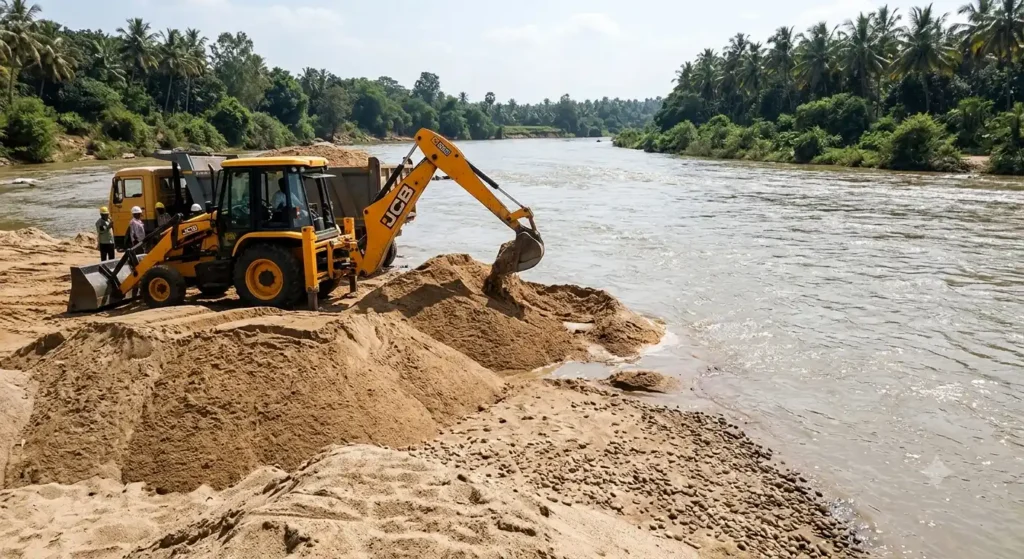
Sourced naturally from riverbeds and banks, river sand is formed over years through natural water erosion.
- Key Characteristics: Consists of smooth, rounded grains with a fine-to-medium texture and minimal natural silt content.
- Engineering Advantages: Excellent workability and smooth consistency make it easy to mix and apply. However, environmental restrictions and mining bans often limit its availability.
- Primary Uses: Bricklaying mortar, wall plastering, flooring, and general masonry applications.
3. Concrete Sand (Crushed Sand)
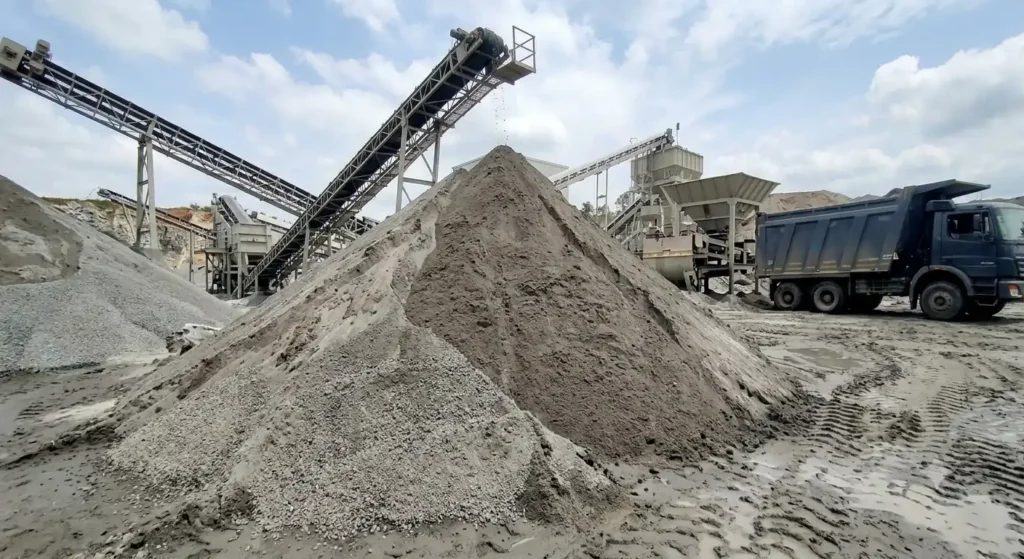
Concrete sand is a coarse, washed aggregate specifically graded to provide structural density. It is processed by crushing quarried stone and screening it to particle sizes ranging from 0.15 mm to 4.75 mm.
- Key Characteristics: Coarse-grained, rough texture with sharp edges. It is thoroughly washed to eliminate dust, silt, and clay particles.
- Engineering Advantages: Fills voids between coarse aggregates efficiently, increasing load-bearing capacity and reducing cement consumption.
- Primary Uses: RCC foundations, structural slab pourings, driveways, pavements, and pipe bedding base layers.
4. Pit Sand (Coarse Sand)
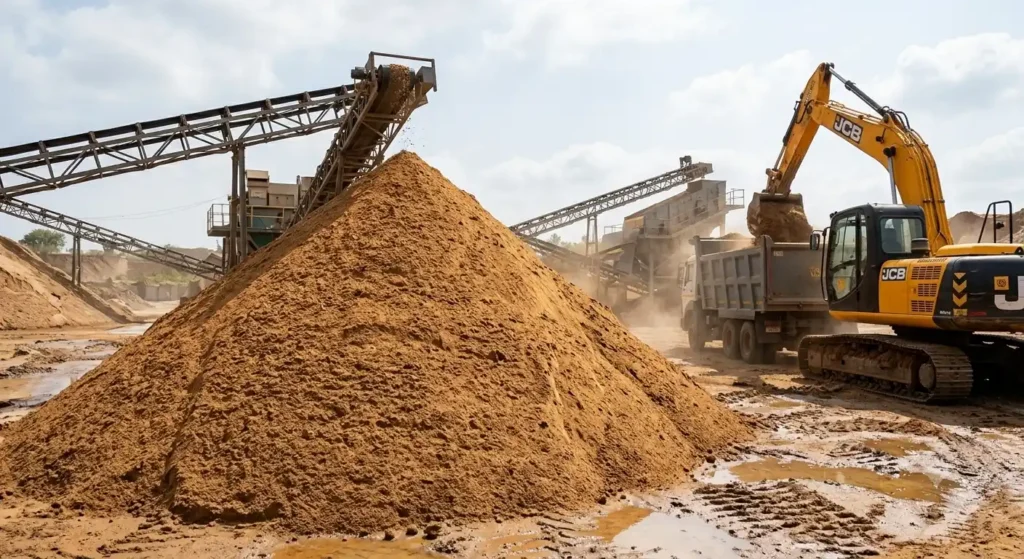
Pit sand is excavated directly from natural underground soil deposits, typically extracted from inland pits at depths of 1 to 3 meters.
- Key Characteristics: Sharp, rough, angular grains usually exhibiting a distinctive reddish-orange color due to iron oxide content.
- Engineering Advantages: Outstanding binding performance due to its rough grain surfaces. It requires screening and washing prior to use to remove organic matter and excess clay.
- Primary Uses: Heavy-duty structural foundations, high-strength mortar mixes, and load-bearing brick masonry.
5. Fill Sand

Fill sand is a natural or manufactured byproduct composed of mixed, coarse, and fine particles.
- Key Characteristics: Coarse texture with variable particle sizing designed for high compaction rather than chemical binding.
- Engineering Advantages: Provides high compaction density, low moisture retention, and minimal shifting under heavy static loads.
- Primary Uses: Base preparation for roads and pavements, backfilling foundations, ground leveling, and site-clearing sub-bases.
6. Utility Sand (Pipe Bedding Sand)
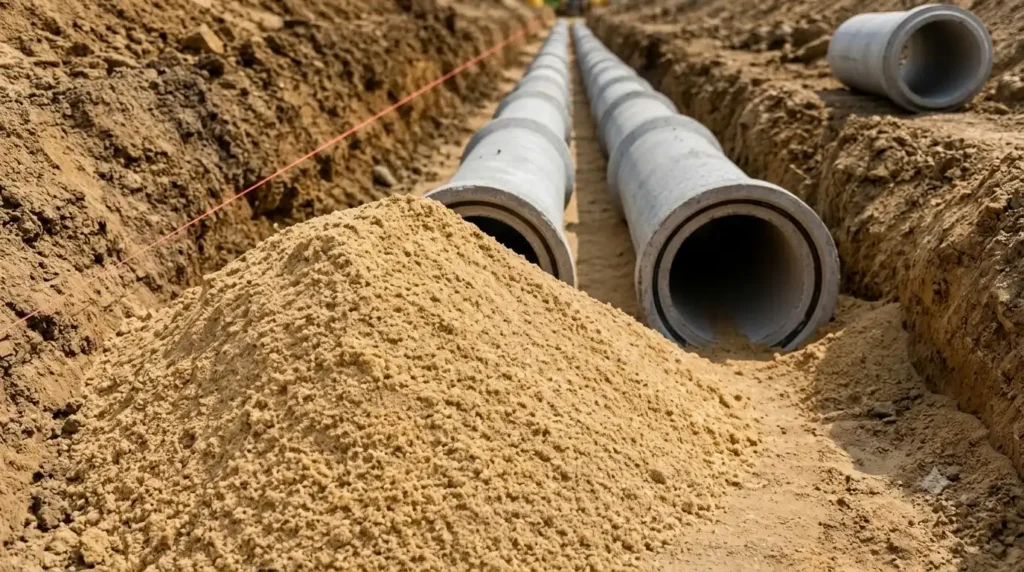
Utility sand is a specialized structural fill sand manufactured for subsurface utility engineering.
- Key Characteristics: Clean, medium-to-coarse, uniform grains with exceptional drainage capabilities.
- Engineering Advantages: Compacts securely around buried infrastructure without creating sharp pressure points, offering uniform load distribution and protection against ground movements.
- Primary Uses: Trench backfilling, cushioning underground pipe installations, electrical cable bedding, and large-area excavation fills.
Build With Confidence, Backed by 10+ Years of Excellence
Building a commercial property is one of the most significant investments you will ever make. You don’t just need a contractor; you need a dependable engineering partner who respects your capital, protects your timeline, and delivers uncompromising structural quality.
Backed by 21 years in the business, Shri Laxmi Constructions combines transparent budgeting, expert value engineering, and seamless design-build execution to turn your vision into a durable, high-performing reality. From initial planning to the final handshake, we handle the complexities so you can focus on growing your business.
Ready to bring your commercial project to life?
[Get a Free Consultation & Detailed Estimate]
Call Our Experts Direct: +91 9880138027
FAQs
Manufactured Sand (M-Sand) is engineered as a legally compliant alternative to traditional river sand and is ideal for commercial concrete, whereas Plastering Sand (P-Sand) is specifically graded for smooth wall plastering applications.
No, sea sand should never be used for building. The airborne chlorides and marine salts present in sea sand cause accelerated corrosion of internal steel reinforcement, ultimately leading to premature concrete spalling and severe structural distress.
You can verify purity using the glass jar test (where the settling silt or clay layer should not exceed 6-8%), the rub test to check for muddy clay residue, a quick taste test to detect corrosive salts, and a visual inspection to ensure the batch is free of decaying organic matter or wood chips.
A sand pad foundation is a specialized sub-structure utilized in areas with low soil bearing capacity, such as soft marshy strata. It is engineered to support massive loads like heavy storage tanks and granaries, typically adding ₹350 to ₹650 per square foot to sub-structure civil estimates.
Traditional river sand extraction faces strict environmental regulations and extraction limits in many coastal regions, making engineered M-sand the necessary and legally compliant standard for structural safety in commercial buildings.